
The Label Maker
An analog invitation

I have a confession, I’m not an organized person.
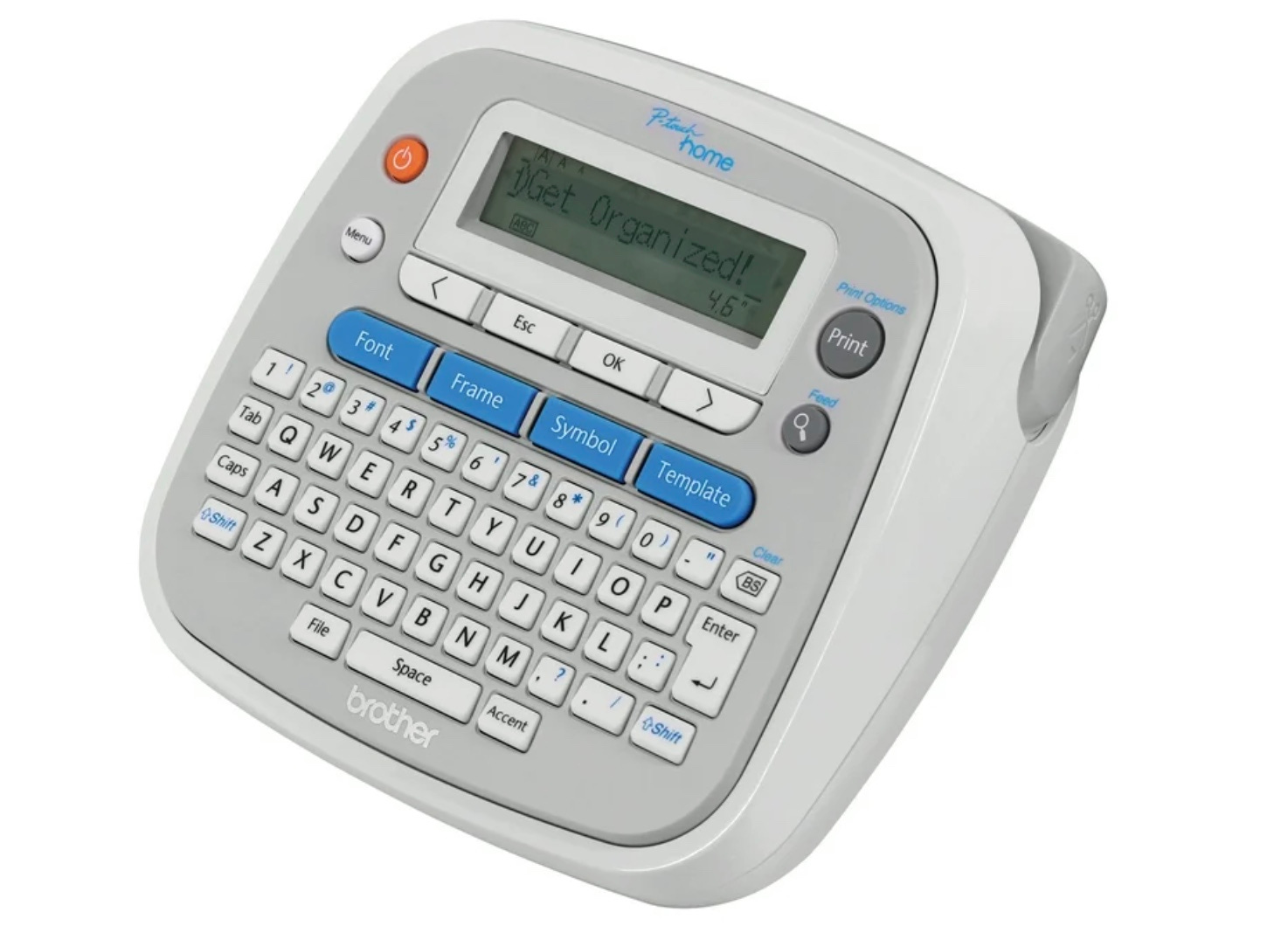
I would love to have everything in its place and a place for everything, but that DNA seems to have skipped me. In an effort to reclaim any organizational gene that might be hiding, (desperate measures and all) I bought a label maker.
Forgive me, Readers, but that is a lie - the label maker was also a procrastination tool. A way to avoid deciding what I would type on my own label.
Me, the... what?
Me, the book coach, therapeutic journaling teacher, the speech pathologist, the mindful writing coach. Me, who once said her zone of genius was helping people get unstuck. (I defer blame to the person who asked the question.)
And yet, here I was, staring at the label maker wondering what title would look good on me. What title encompassed everything that I wanted to embrace?
Nothing fit.
Everything felt like a scratchy wool sweater I couldn’t wait to remove. As I did before, when the redefinition was forced upon me, I returned to the page.
I used strategic tools, writing techniques, and therapeutic models. I wrote, day after day, sometimes two or three times. I made lists of ALL the words I love and combined them. The results were nothing short of ridiculous.
Executive narrative strategist. Mindful curator of stories. Clinical language architect. Cozy word guru.
Utter nonsense.
It shouldn’t be this hard, I said out loud to my perpetually confused-looking doodle. The one who sighs when I talk to myself and lies across my computer when I try to write. He was unimpressed. He’s seen this before.
So I changed my strategy. I stopped trying to define myself and focused on who I’m actually doing all of this for.
Because here’s the thing: it’s never about me.
Credentials and expertise are the spine, but they’re not sensory. They don’t make anyone feel seen. And feeling seen, writing yourself out of the shadows, out of resistance, and into your energy. That is the whole point.
I write:
For the woman who knows she’s running an outdated script, who remembers the card catalog, and who knows nobody puts Baby in a corner.
For the woman with a story she’s dying to tell, but doesn’t know how, or when to begin.
For the high-performing woman.
Which is to say: all of us.
For the multi-passionate woman with her head on a swivel, a basket of laundry under her arm, and an idea she can’t shake.
For the woman who chose practicality over creativity and still keeps a drawer of first drafts that she’ll get to - someday.
For the woman who understands longevity is habits, not hacks.
You are not broken.
You are not behind.
You are over-edited.
Too many voices.
Too many inputs.
Too many years revising yourself to fit rooms that weren’t even built for you.
Your life has become a document with track changes on and collaborators you never invited.
I look around, and I’m struck by everyone — eyes down, faces in their phones.
The overloaded systems. The notifications that feel like demands. Pings in the middle of the night that signal a new video. We are so afraid of missing something that we’ve optimized ourselves into exhaustion and called it productivity.
We scroll through other people’s lives instead of living our own. We consume instead of create. We react instead of reflect.
And somewhere in the noise, we lost the thread of our own narrative.
This is why analog is calling to me, to us. Is it calling you too?
There’s a longing for something tactile, tangible, for stories that aren’t on a screen.
It’s more than nostalgia, though I do miss the weight of paper, the scratch of a good pen, the way ink turns a thought into something you can hold.
But as a method. As resistance. As a return.
A return to slow, yes. But also a return to ourselves. To community. To gathering in art and creativity without comparison. No hearts and sends. To looking someone in the eye and saying you like their work, their words.
A return to focus. To the kind of attention that can’t be hacked or optimized.
One notebook. One pen. One place for your story to land without noise.
So here’s what I’ve finally decided to call myself:
I’m an Analog Coach.
Helping you write a life you don’t need to edit.
I help women write a chapter, a story, a life with method and magnetism.
The expertise that allows me to lead in menopause collaboratives and medical schools is the neuroscience of narrative. Rituals, tools, story, and science.
This is a community where we reduce the noise.
We take thinking out of the head and onto the page. We edit the scripts - the hedging, the apologizing, the “I’m fine” when you’re not - and replace them with language that can actually hold you.
This isn’t therapy. It’s practice. It’s creating an architecture for attention and agency. (Because you are the hero of your story)
And I’ll be guiding you through it.
Sometimes change arrives as a sharp “aha.”
Sometimes it’s the slow burn of writing day after day until you look up and realize you’ve changed.
The best part: you can’t mess this up.
You come back.
You write.
You reflect.
You revise - not from doubt, but from growth.
And somewhere along the way, you become the woman you’ve been circling.
Thinking about.
Waiting for.
We’ll start with the Words We Carry — the ones we inherited, the ones we outgrew, the ones that are quietly running the show. We’ll examine them. Edit them. Replace the language that no longer fit. But everything we do will be based in story and backed by science.
Because language is leverage. The words you use shape your life.
If you’re ready to stop asking for permission and living in the draft -
Pick up a pen. Find a notebook.
Write one true sentence about who you are right now — not who you were, not who you’re supposed to be.
That’s where we begin. You already believe your story has power.
Now it’s time to live like it.
How this manifests:
Each week, in Words We Carry, I’ll send a short essay - something to sit with, not scroll past. Language, narrative, identity, the quiet work of focus and theme. Think of it as a letter from someone who’s also doing the work. I may share what I’m reading, what I’m noticing, what’s helping me stay in my own lane instead of doom-scrolling someone else’s. I may even just send a picture of what’s in my bag for the week.
Each month, I’ll share a strategic tool, story method, or reflection technique. This is the curriculum, what I teach in Dr. Hirsch’s practice and the medical schools. I will include worksheets, guides, prompts and pdf’s. These are the analog practices you can tuck into your notebook.
Nothing precious. Nothing overwhelming. Just paper and pen and permission to slow down.
This is a space, not a program. Come as you are — I’ll meet you at the door.
Community counts here - this is a collaborative and I want your comments to lead the way. Discussions aren’t optional, they’re everything. Everyone is welcome here. Ask your friends, make it a ritual, a routine to talk about over coffee.
What I’ve learned leading over 100 classes - what you share may allow one person to feel seen, heard, understood.
Are you in for analog?
It’s free to start. Paid subscribers will receive my published, guided journal ($25.00 on Amazon & debuted #1 in midlife) in a separate post later this week. The journal is a quarterly collection of guided prompts, gratitude, and goal setting.
And if you’re already here — welcome. Pull up a chair. Grab your notebook.
Let’s begin.
This is for you.
Love you tons,
Karen
Right now, my daily routine is copying quotes from famous people. For example, Einstein, Madame Curie, and Amelia Earhart to name a few. A new yearning to grow, a warm glow feeding my soul with new possibilities. (Sorry, more than one sentence)